Be Yourself. Get A Job. That Simple.
Why So Many College Graduates Are Struggling in the Workforce: The Soft Skills Gap No One Talks About
By Bobby Romadka
Every year, thousands of students walk across a graduation stage, degree in hand, ready to start their careers.
But more and more of them are realizing that the real world isn’t as welcoming as they expected.
Many are struggling to get hired—and even more surprising, some are losing jobs shortly after they start.
87% of employers say new hires do not last in their first year of employment due to a lack of soft skills
The issue isn’t intelligence.
It’s not lack of ambition.
And it’s not that employers are too demanding.
The biggest problem is simple:
Many new graduates lack soft skills—the human skills that make someone valuable in the workplace.
College Prepares Students Academically, But Not Socially
Universities are great at teaching:
Information
Theory
Technical knowledge
How to study and pass tests
But few teach students how to:
Introduce themselves confidently
Communicate clearly
Handle disagreement
Manage their emotions
Deal with feedback
Build relationships
Speak up in meetings
These skills aren’t offered in textbooks—but they matter more in the workplace than almost anything else.
Employers aren’t just hiring knowledge.
They’re hiring people who can work with people.
Students Can Write Essays, But Can They Have Conversations?
Many employers are saying the same thing:
“New hires are bright, but they struggle to communicate.”
And it shows up in many ways:
Avoiding eye contact
Struggling to speak confidently
Not knowing how to ask for help
Being uncomfortable with small talk
Breaking down when criticized
Lacking initiative
Some graduates can write a 20-page research paper but are terrified to speak up in a team meeting. Others communicate well online but struggle face-to-face.
In the workplace, communication isn’t optional—it’s expected.
Soft Skills Are Now More Valuable Than Ever
With automation and AI doing more tasks, employers are doubling down on skills technology can’t replace:
Leadership
Teamwork
Adaptability
Problem solving
Initiative
Communication
Critical thinking
Sales and persuasion
A strong communicator with average technical skills is often more valuable than a technical superstar who can’t work well with others.
-> Hiring managers know it.
-> Recruiters know it.
-> The market shows it.
Why Young Workers Lose Their Jobs
Most young employees aren’t losing jobs because they can’t do the work.
They’re losing jobs because of:
Poor communication
Misunderstandings
Not asking questions
Breaking down under pressure
Taking feedback personally
Not being able to hold difficult conversations
In other words—they’re losing jobs over soft skills, not job skills.
Technology Has Made This Problem Worse
Today’s students grow up texting instead of talking. When something is uncomfortable, they can scroll away. Many have fewer real-life reps interacting with strangers, dealing with rejection, or solving face-to-face problems.
A screen doesn’t teach:
How to shake a hand
How to read body language
How to recover when something goes wrong
How to think on your feet
Only real-life experience can do that.
The Good News? Soft Skills Can Be Learned
Some of the best ways young adults learn soft skills include:
Jobs in sales or customer service
Internships
Public speaking
Networking events
Leadership roles
Working with teams
Communicating with people outside their comfort zone
These environments teach what classrooms rarely do:
Confidence
Resilience
Presence
Emotional maturity
With practice, students can go from shy and unsure to confident and capable.
Final Thought
The workforce is changing fast, and academic knowledge alone is no longer enough. Employers want graduates who can:
Think
Speak
Connect
Adapt
Lead
Soft skills are not “nice to have”—they are the difference between getting hired, staying hired, and advancing in a career.
If parents and students want a secure future, they must start focusing not just on degrees, but on developing the human skills that make someone hard to replace.
Because in a world full of automation, the most valuable ability a young professional can have is simple:
Knowing how to work well with people.
Need Help?
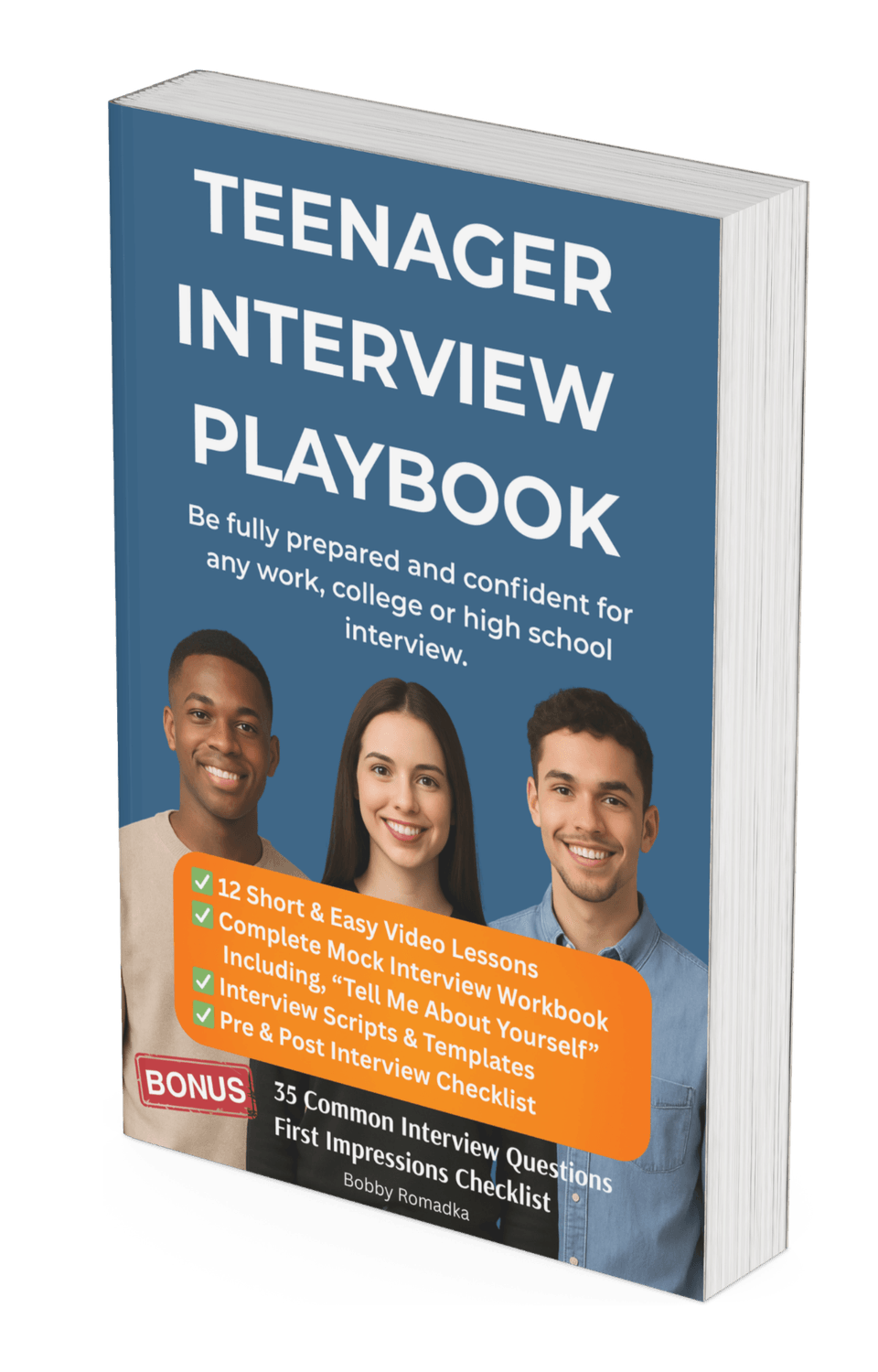
👉 Grab my Interview Prep Crash Course, a fast, powerful training that gives you exactly what you need to speak confidently, sell yourself, and stand out—even if you have an interview tomorrow.
About the author
Bobby Romadka spent years in both sales and in the staffing industry. Sales taught him how to communicate and stand out, while staffing taught him what hiring managers really look for. His interview technique tips went viral on social media and now he focuses on helping the younger generation prepare for the workforce.

Need Additional Help?
Be Yourself. Get A Job.
That Simple.


Stay informed with valuable tips on communication, interview and job searching tips.